




More and more businesses are using sporting events, whether it’s the F1®, the World Cup, or the US Open as opportunities to meet face-to-face with customers.
But this is no normal business travel.
We’ve seen this up close since becoming a proud partner of the Audi Revolut F1® Team. So we looked at the data to understand exactly how global events like F1® races impact travel.
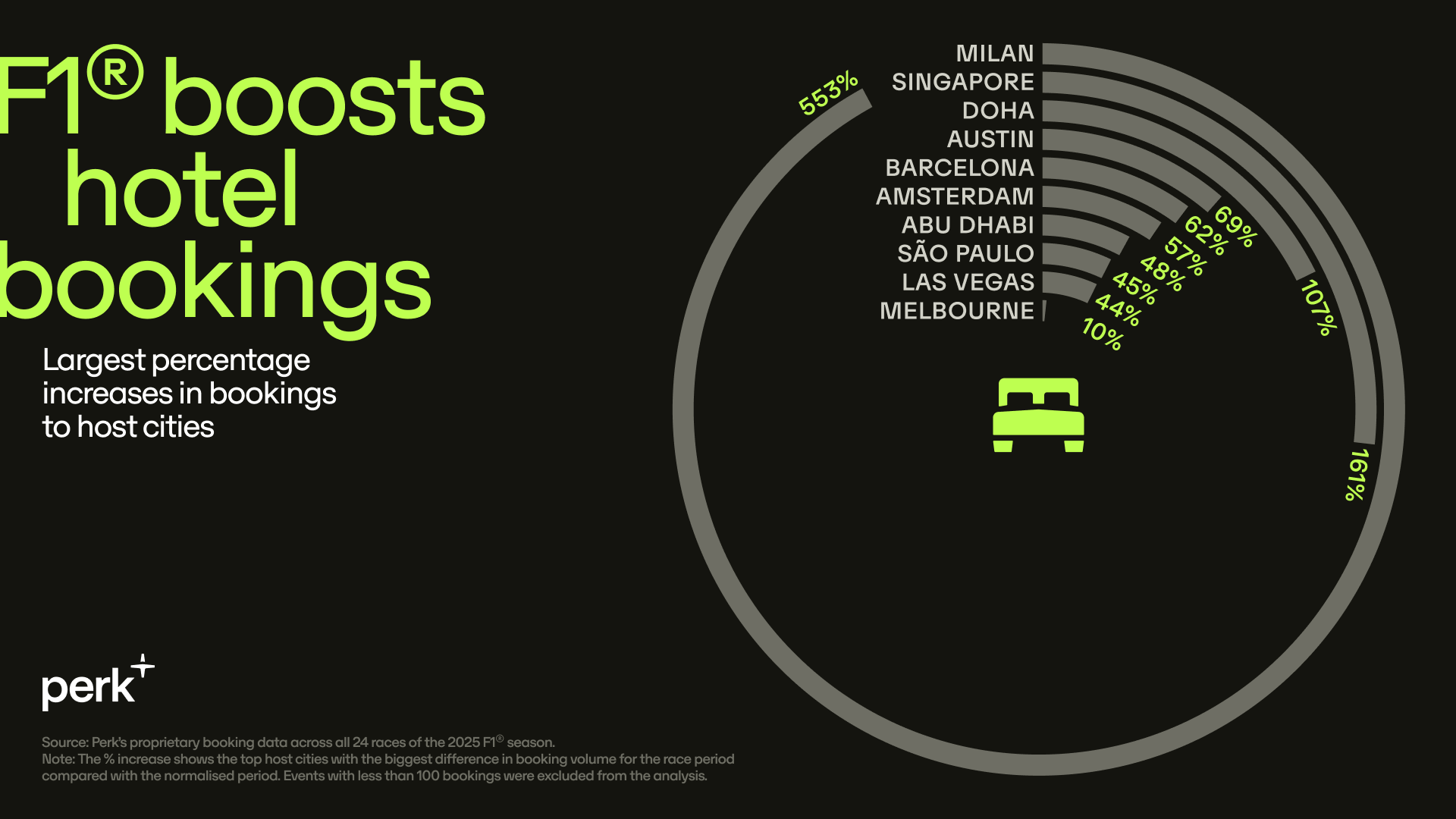
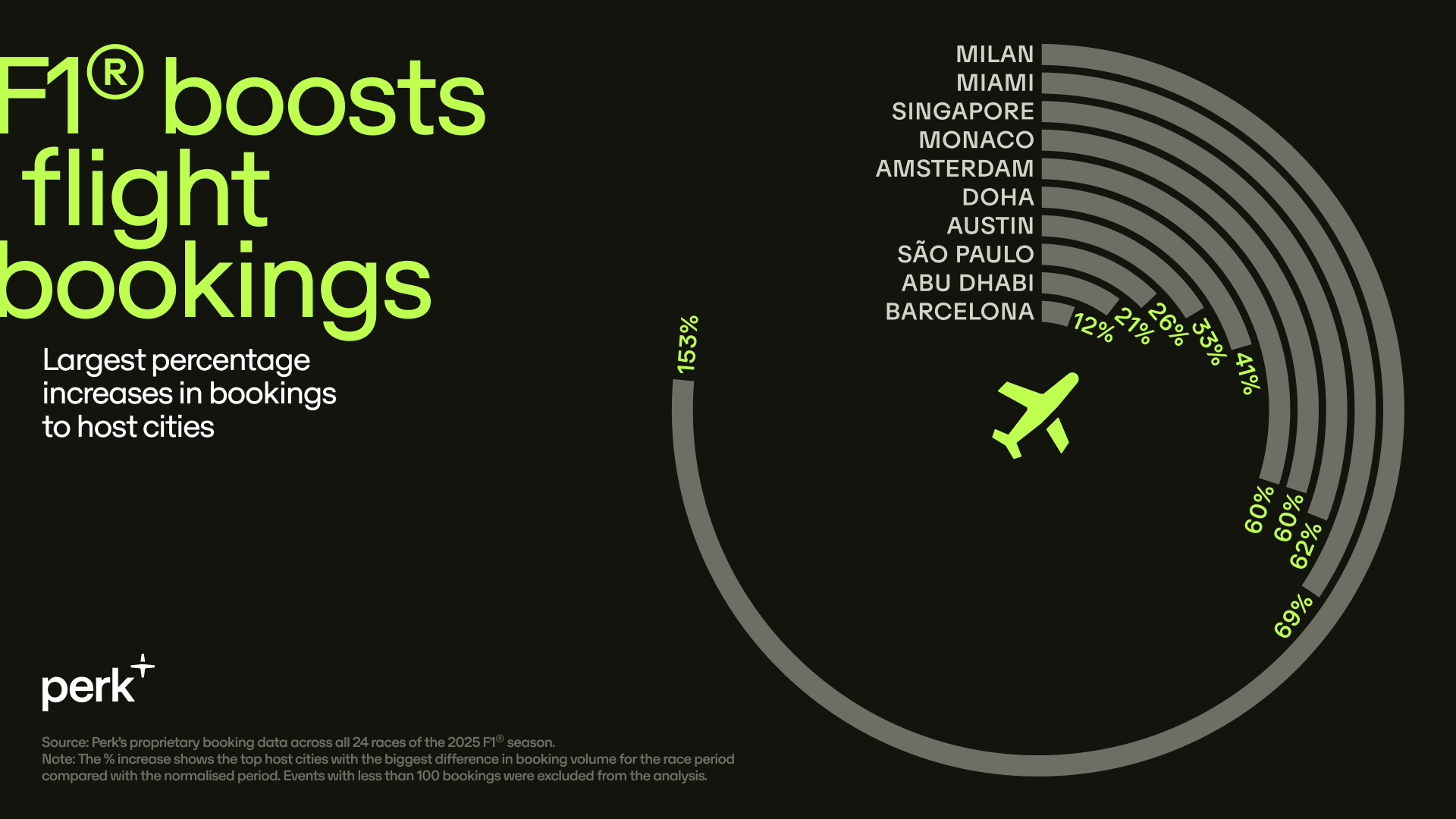
The patterns are clear. On average across host cities, hotel bookings increase by 49% during race weekends, and flight bookings go up by 17%.
But that’s only part of the story.
Why this happens
At first glance, it looks simple. Demand goes up, prices follow.
What’s actually happening is different.
Events like these compress demand into a very short window. A lot of people need to be in the same place, at roughly the same time, with very little flexibility. For many teams, that means fitting multiple high-value meetings into a single weekend instead of spreading them out.
We’ve seen this ourselves while planning around the GP in Miami. Flight bookings increase by 69%, not just because more people are traveling, but because they are all trying to be there at the same time.
The challenge is not just that demand is high. It’s when it shows up.
Based on our data, the median booking window for travel is 26 days out from the event. That’s often when much of the demand compression happens. But around half of travelers book flights within 15 days of the race.
And it’s not the same for every race. Booking patterns vary depending on the location and the type of demand, which is why looking at past trends can help anticipate how prices will move.
What this means for business travel
When demand concentrates this quickly, pricing follows. But price is not really the root issue. It’s a reflection of availability.
The earlier you book, the more availability there is.
Once availability disappears, costs increase quickly. At that point, you’re no longer optimizing travel, you are reacting to what’s left.
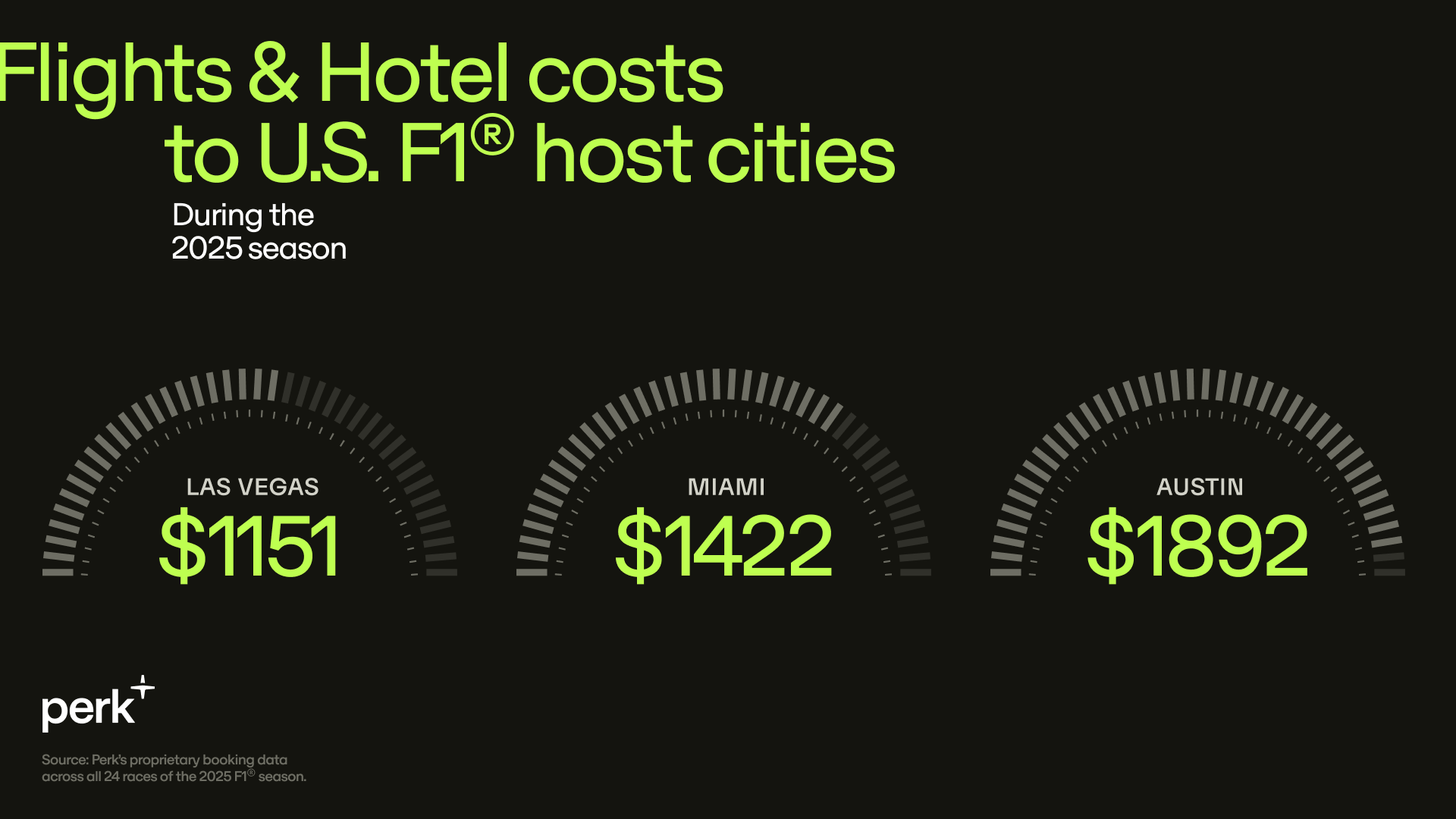
For example, in Austin, 4-star hotel prices increase by 47% in the final week before the race.
But not every event behaves the same. For Barcelona, flights can sometimes be cheaper closer to the race. Those cases, however, are the exception.
Early planning means cost control
If you know your team will travel for a major event, planning earlier is not just helpful. It’s part of cost control.
During race weeks, waiting doesn’t just increase prices, it reduces your options.
In the end, it is not really about F1®; it’s about understanding when demand is predictable and acting on it early.
Race weekends just make that pattern impossible to ignore.
Written by
)
Perk Co-founder & CEO
:format(webp))
:format(webp))
:format(webp))
:format(webp))