


Key takeaways
- Launched in 2012, New Distribution Capability (NDC) is a stable airline distribution standard that is key to modern travel programs.
- Approval and budget issues can be caused by NDC's real-time dynamic pricing, which causes flight costs to fluctuate constantly.
- Many airlines currently use a hybrid model, pushing attractive bundles exclusively to their NDCs.
In 2012, the travel industry was promised a replacement for slow text-based global distribution systems that couldn’t keep pace with modern travel needs. Through New Distribution Capability (NDC), travel managers were offered a system with modern APIs, dynamic offers in a rich corporate-friendly interface.
However, over ten years since NDC was introduced, this promise hasn’t quite been delivered as expected. Barriers remain, such as inconsistent integration, slow adoption in the industry in general and compliance constraints.
When NDC isn’t integrated with a travel management platform effectively, it can introduce even more work than it claims to solve, with fragmented workflows, ever-changing price models, and unstructured data that legacy platforms will struggle to process.
In this article, we’ll examine how NDC is reshaping corporate travel, explore how airlines use NDC today, look closely at the modern pain points it causes, and provide actionable ways to make NDC content work cleanly inside your travel program.
What is NDC?
The New Distribution Capability (NDC) isn’t a new phenomenon. It was launched by the International Air Transport Association (IATA) in 2012. At the time, it was a new standard that allowed airlines to push more dynamic offerings to customers and corporate platforms. Instead of relying on clunky text messaging through Global Distribution Systems (GDS), users could now access personalized, rich content such as preferred seating or baggage options.
"Airlines have been clear about where distribution is going. Increasingly, the best fares and content are available through NDC, while legacy EDIFACT channels may come with surcharges or content restrictions. We started investing in NDC connectivity with our first airline partners back in 2018 and have continued to invest aggressively ever since. For us, it’s about making sure our customers have access to the best content airlines offer, without sacrificing the seamless experience and servicing they expect from Perk.”
Kristina Carter, VP, Global Partnerships, PerkThis table outlines how legacy GDS models and NDCs differ when it comes to work travel:
Scenario
Before NDC models were introduced, travel managers would book employees a no-frills flight, and the employee would have to pay for their baggage and extras like in-flight WiFi when they checked in using a company card.With NDC, managers can build a flight bundle suitable for their employee at the point of booking. Not only does this mean the traveler has one less thing to think about when they check in, but it also simplifies the process for the travel manager by reducing the amount of expenses the employee has to submit later.Which carriers are live on NDC?
Major global airlines such as American Airlines, Singapore Airlines, Air France and KLM route a portion of their business travel bookings through NDC channels. However, implementation quality and features vary drastically from one carrier to another.
Here is a summary of the current state of play for the top airlines in the US:
Source: The Travel Team’s NDC fact sheet
How airlines and platforms use NDC
The adoption of NDC means there have been several changes in how travel choices are presented to employees:
Real-time deals
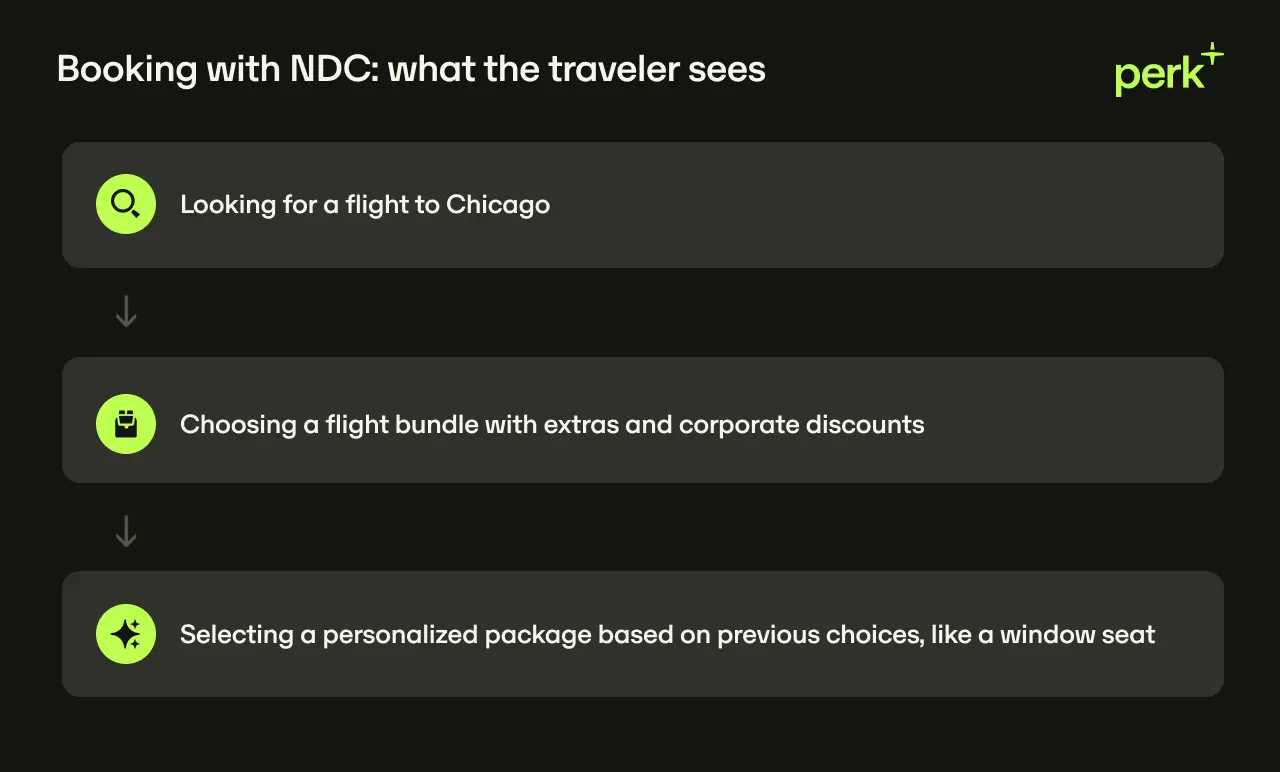 Under GDS models, airlines shared fixed-price flights to a central database. But with NDC, airlines can present base fares alongside extras such as checked baggage or priority boarding, building offers in real-time. Travelers get the exact package they want, avoiding the need for further booking at the check-in desk and the creation of more paperwork.
Here’s how that works in practice. An employee who's a regular traveler searches for a fare on a popular company route. The NDC connection means the airline recognizes the worker’s status as a frequent flyer, alongside the company’s corporate rates. It presents a customized travel package based on the employee’s previous choices and according to the company’s travel guidelines.
A potential content gap
Some airlines are running a hybrid model where they continue to publish basic fares within legacy GDS environments, but push more attractive bundles to their NDC channels. This is because it allows air carriers to more easily upsell extras and loyalty benefits. American Airlines shifted around 40% of its fares into NDC routes in 2023. Similarly, United Airlines have limited certain fares in legacy channels to drive NDC adoption.
For travel managers, this can create friction if employees are using a platform that doesn't capture both streams. If a worker is searching for a flight and works out that they can get a more convenient deal directly from the airline, they are likely to bypass the company’s booking platform. This is likely to create time-consuming extra admin for the finance and travel management teams down the line, known as shadow work.
The friction involved in managing business travel with NDC
Now that NDC is the norm and travelers are benefiting from all of this flexibility and customization, how is it affecting travel managers who have to navigate these systems?
When travelers arrange business travel across multiple platforms to find the best NDC flights, it creates a trail of fragmented data, with travel managers left to chase mismatched invoices and manually update itineraries.
The Cost of Shadow Work report, a Forrester Consulting study sponsored by Perk, estimates that shadow work like this costs businesses $564 billion a year in lost productivity.
The following risks also have the potential to create more costly shadow work:
Fragmented workflows
If a company uses a travel management platform that does not aggregate the NDC data correctly, this could introduce compliance issues. Employees might book their trips off-platform, which introduces extra paperwork and breaks the travel manager’s visibility of the entire trip.
Dynamic pricing and budgets
While dynamic pricing that continually fluctuates means that you could wind up getting some great deals, this uncertainty can be a challenge for corporate travel managers. By the time a travel manager approves a flight, the price may have changed, taking it out of policy. Predicting budgets is suddenly a nightmare and price variations ruin your forecasting.
The risk of legacy software
If your company isn’t working with a modern expense tracking platform, the rich XML data that flows from NDC connections might cause issues. Older software might struggle to categorize spend correctly when faced with this unstructured data.
Trip changes can cause problems
Changes to a work trip itinerary or last-minute cancellations aren’t always compatible with NDC tickets if the integration with your in-house software isn't correct. This can create an ongoing cycle of shadow work if your platform can’t process changes to a trip.
When NDC implementations work best
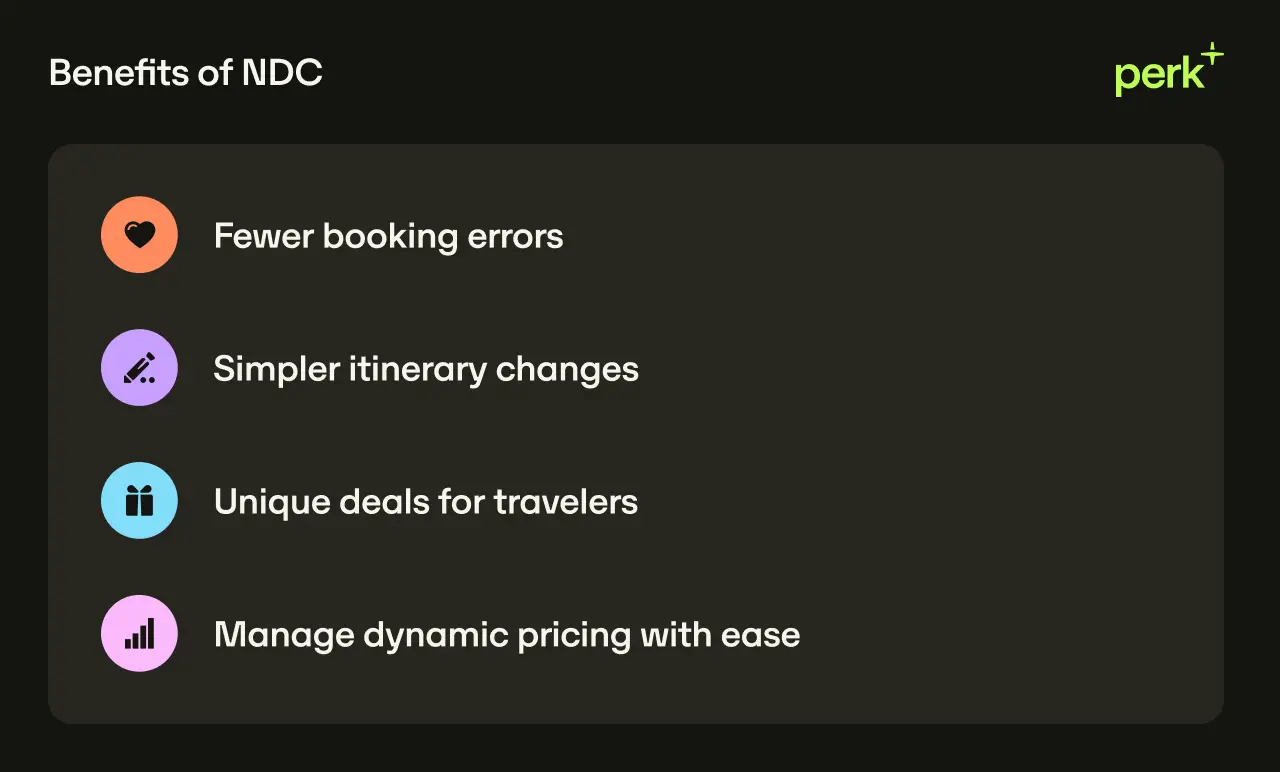 Despite the risks mentioned above, when a platform integrates NDC effectively, the benefits to travelers and travel managers are numerous.
The airline retailing software provider Accelya reported seeing NDC bookings grow 146–168% year‑on‑year in 2024–2025. Among the positive results are fewer booking errors and better self-service capabilities with some platforms automating 99.5% of itinerary changes during disruptions.
Here are some other advantages:
Flight changes are simple
When integrated correctly, NDC can actually simplify things when plans change. If a traveler needs to change their journey, an NDC-enabled platform accesses the details directly from the airline's database. This lets employees check live fare differences and update the ticket instantly in one centralized interface.
Travelers can access unique deals
One of the benefits of an effective NDC connection is access to transparent pricing and deals that airlines only share via NDC or their website directly, like special bundles and premium extras. Great for budget control and getting travelers the best flight for their requirements. According to Garner’s “Unlocking NDC: Early Results in Corporate Travel” report, companies using NDC saved 3.3%-16.6% per ticket.
Dynamic pricing is no longer an issue
Dynamic pricing can be a nightmare for travel managers, with costs constantly fluctuating. But using policy filters can help. Even with dynamic pricing, modern travel management platforms can automatically filter out options that go above your spend thresholds as prices move. So your employees can access the latest flight prices, but your budget is protected.
Keep corporate travel management simple with Perk
With NDC, there are as many friction points as there are opportunities. With a modern travel booking platform, managing the positives and negatives is going to be a lot simpler.
Perk’s powerful platform simplifies how your teams travel, and works hand-in-hand with the very best spend tools to give you a single platform to manage everything. Discover how to make the most of what NDC can offer with streamlined travel booking, enforced policy compliance, and your real-time spending visibility.
Book a demo today and see how an automated approach can optimize your business travel workflow.
Written by

Product Marketing Manager
