






The costs of travelling for work can be significantly affected by unexpected disruptions. Anything from client cancellations and rescheduling to changing who is attending a scheduled meeting can add volatility to planning and budgeting for travel.
According to Perk’s third annual global survey, 90% of business travellers in the UK were affected by travel disruptions in 2025, and UK companies are spending around £1.6 billion each year due to flight cancellations.
For finance teams and travel managers, these statistics present a potentially costly dilemma: do you book non-refundable tickets to save cash upfront, but risk losing the entire fare, or do you pay a premium for flexible tickets that you might not need?
Here, we identify how to make business travel easier and lower costs through smarter, flexible flights and the use of FlexiTravel. We’ll show you how to reduce financial risks without sacrificing adaptability.
Looking for hotel-specific advice? Hotel cancellation policies work differently from airlines. For a deep dive into optimising your accommodation spend, read our dedicated guide.
How advanced booking lowers business travel costs
One of the biggest misconceptions about flexible business travel is that the tickets are always more expensive. While a flexible fare will have a higher price tag upfront compared to an advanced ticket, the risk of changes to the plan and the resulting additional cost of replacement tickets is reduced.
To find a balance between value and avoiding cancellation fees, business travel managers may take a ‘wait and see’ approach, delaying bookings until the last minute so that plans are confirmed and less likely to change. However, travel prices typically punish procrastination and cost most when booked days ahead of travel rather than further in advance.
SkyScanner’s savings generator suggests that booking 16 weeks ahead of a flight from London to New York provides the best price, but this is a long time during which travel plans could change significantly, and the added expense of rebooking after cancellations could result in these savings being lost.
By using a flexible booking service, travellers can book the cheaper advanced rates weeks ahead of time with the confidence that they can secure their ideal routes and layovers, but also cancel if necessary. This removes the fear of unexpected changes undermining early bird savings.
Why flexibility is important for business travel
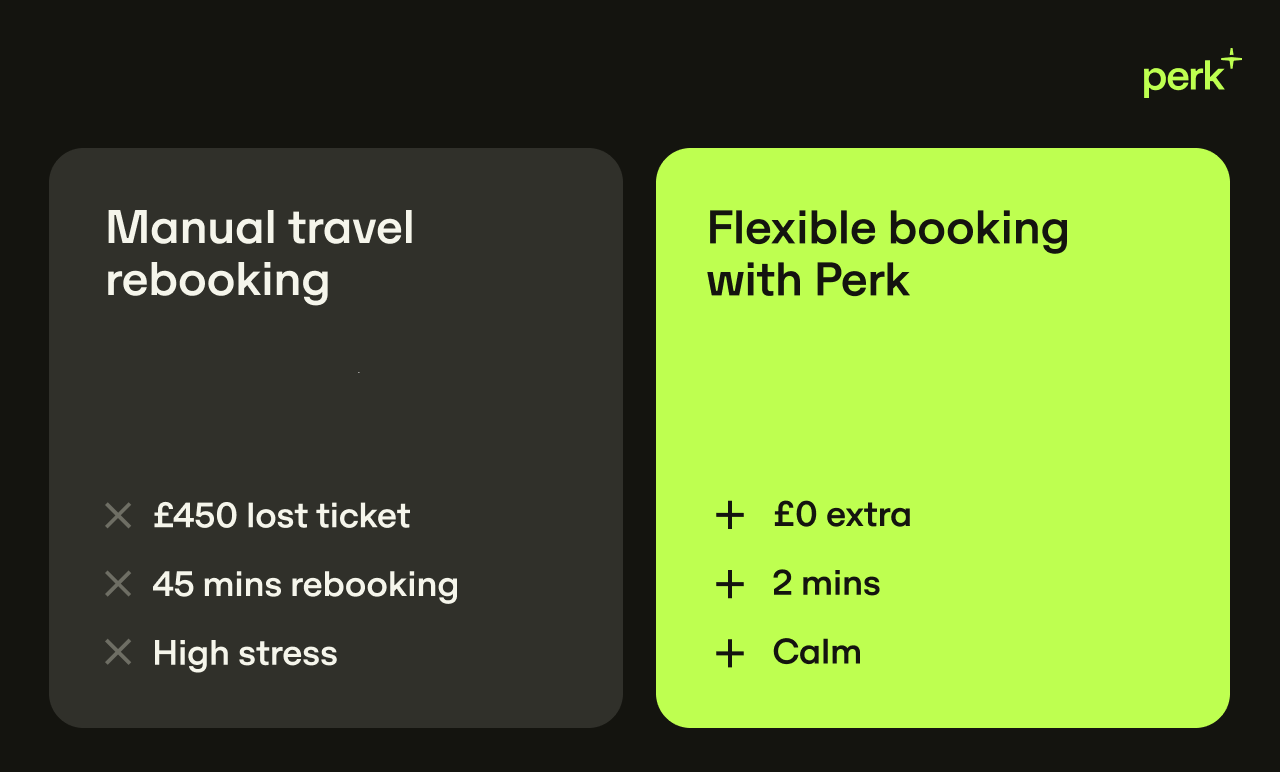
If they are not carefully managed, last-minute changes can cause distractions for business travellers, potentially impacting the success of their trip. Beyond the initial financial outlay, securing flexible bookings can avoid this and have a significant positive impact on work travellers and their performance.
For business travel, where time is at a premium, the ability to change a flight last minute offers scheduling flexibility that keeps teams focused on their objectives rather than being distracted by the ‘shadow work’ of rebooking and logistics.
Consider this real-world example:
A flight is booked on a non-refundable fare to save money, costing roughly £1,500. The client meeting runs long, and the traveller misses their flight. Not only is this a concern for them, but it would likely be a significant distraction during the meeting itself. A new, last-minute, one-way ticket is ordered, potentially doubling the original travel cost of the trip.
The alternative would be to pay the additional cost of a flexible flight, allowing the return flight to be rearranged for no more than a minimal fare difference, reducing distractions and ensuring the meeting is as beneficial as possible and not interrupted by time restrictions.
Additional flexibility also enables travellers to extend their work trips for bleisure opportunities, such as attending a conference and then staying for the weekend to enjoy the local area, which can contribute to improved work-life balance and lower stress.
The high price of ‘traditional’ travel flexibility
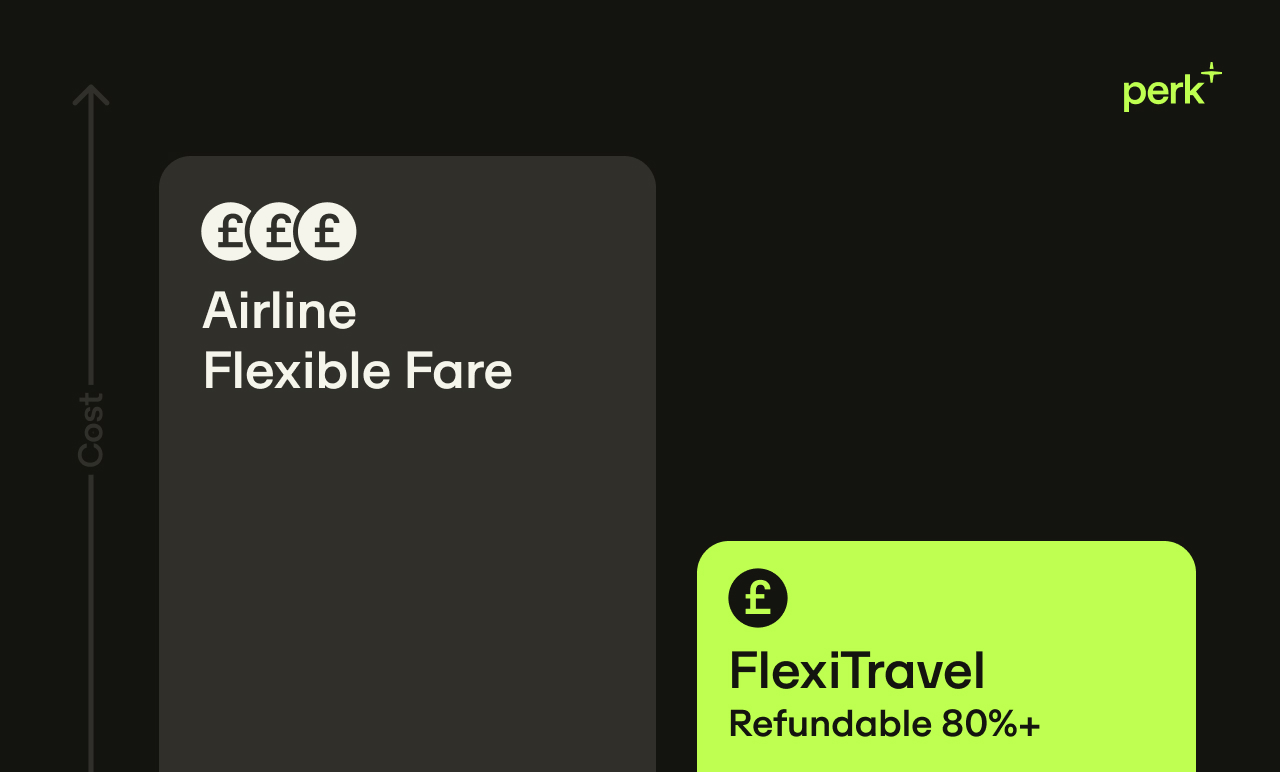
Airlines and train providers know that people travelling for work need adaptability, and so they price fully refundable fares accordingly. Depending on the route and booking window, these fares are significantly more expensive than non-refundable options.
For executive business travel, such as a round-trip business class ticket from London Heathrow to JFK (New York), that premium could be hundreds or even thousands of dollars. It is a cost that smaller businesses in particular may struggle to justify, forcing them to gamble on non-refundable tickets rather than paying for peace of mind.
Many major UK carriers like Virgin Atlantic and British Airways offer specific fares that do not include change fees, but this does not resolve the issue entirely. While penalty fees can be avoided if you make a change, your money is not returned to the original payment method and is instead tied up in a ‘flight credits’ system, which often expires after a certain period of time, is non-transferable, and is tied to the specific airline or passenger.
To ensure a cash refund, booking an expensive refundable fare is still required. Luckily, Perk can offer a solution that guarantees refunds and retains flexibility.
FlexiTravel: flexibility without the premium
FlexiTravel is a business travel solution designed to provide maximum flexibility. It allows companies and travellers to cancel bookings for any reason and receive a guaranteed refund, minimising the financial risk of changing plans - without the added cost of booking specific flexible tickets.
Most people associate flexible bookings with airlines, but a business trip is rarely just a flight. Real agility requires protecting the entire door-to-door journey. That is why FlexiTravel covers flights, hotels, and trains, allowing companies to cancel any part of the trip for any reason.
Key Benefits
Cancel anytime. You can cancel flights, trains, car rentals, and hotel stays up to 2 hours before departure (or until 4 PM on the day of check-in).
Guaranteed refunds. Receive at least 80% of the trip cost back upon cancellation.
Instant credit. Refunds are issued as non-expiring credits to your account, which can be used for any future booking, benefitting from Perk’s global inventory and negotiated rates.
No questions asked. Cancellations can be made for any reason without needing to provide justification.
Is it worth paying extra for flexible flights?
While there are many cost-saving benefits to flexible travel booking, there are some circumstances where cancellation chances are slim, or the loss would be minimal.
For additional clarity, make sure that company travel policies clearly identify which types of travel require flexible booking and those that are low enough risk to not require it.
Imminent travel - If you are booking a single flight for the next day, the chances of a cancellation or change are very low, meaning the insurance of a flexible fee may not be necessary.
Low-cost short haul - In some cases, a short internal flight can be very inexpensive, making the potential loss minimal when compared to the administrative cost of arranging a refund.
Making business travel easier and more cost-effective
Business travel is often dictated by external factors like client availability or conference dates being rescheduled. Effective use of comprehensive travel solutions allows a company to be agile, booking trips without being financially punished if the circumstances shift.
Perk’s platform automates policy and compliance, eliminating the need for travel managers to manually approve every flexible ticket and automatically allowing flexible bookings only when the risk of cancellation is high to ensure you pay for flexibility only when you actually need it.
Flight credits and last-minute bookings are not a sustainable strategy for managing travel costs, they simply defer expenses and create more admin. To truly lower costs, businesses must unbundle flexibility from the fare. Don't pay a premium for a refundable ticket you might not need. Instead, add flexibility separately so you’re covered if plans change, but saving money if they don’t.
FlexiTravel empowers employees and travel managers to:
Book the lowest available rates early
Maintain the ability to cancel for a refund (at least 80% on all trips cancelled within the notice period)
Eliminate shadow work or chasing refunds and rebooking at short notice.
Read Perk’s guide to flexible travel for more insights and guidance, or book a demo to explore the benefits of FlexiTravel and find the right level of flexibility for your travel budget.
Written by
)
Growth Marketing Director
:format(webp))
:format(webp))
:format(webp))
:format(webp))