


Updated: October 2026
Traditional expense forecasting methods rely heavily on historical data and manual spreadsheet uploads, which creates an endless stream of invisible, manual tasks, like chasing down physical receipts, also known as shadow work.
According to Perk's The Cost of Shadow Work Report, these invisible tasks cost businesses globally an estimated £1.2 trillion a year in lost productivity, with £95 billion of that hitting UK companies alone.
Real-time expense data offers a powerful solution to these challenges. With up-to-date insights from corporate card transactions, finance teams gain instant visibility into spending patterns, allowing them to make quick, data-driven adjustments to forecasts and budgets.
And with smart corporate cards, finance teams can integrate real-time data and effective forecasting models directly into their organisation’s workflows.
This article explains how this real-time card data can be used, with insights into the value, improved forecasting, and how to use Perk Pay for further enhancement.
What is real-time card data in practice?
To build an automated, forward-looking expense forecast, finance departments must swap historical guesswork for continuous transaction streams. Real-time card data means that the moment a colleague taps a corporate card, that data instantly populates your financial models.
In practice, a live corporate or virtual card feed delivers highly granular data packages instantly, including:
Immediate authorisations
Visible transaction requests that flag pending spend before a charge even clears
Cleared transactions
Settled card transactions that automatically update actual cash positions
Merchant Category Codes (MCCs)
Automated merchant classifications (e.g., airlines, lodging, software vendors) that route spend to the correct GL code
Cost centre allocations
Transaction details are instantly mapped to specific business units, departments, or project codes
Challenges in forecasting without real-time data
Forecasting can be a hassle and a significant burden for businesses of any size to keep up with. Without real-time data access, finance teams face challenges such as:
Missing expense data
When teams are working with fragmented data sources from monthly or quarterly financial reports, it can lead to delayed or missing expense data, which can make cash flow projections and financial reporting unreliable.
Additionally, missed correlations in spending patterns can prevent accurate short-term forecasting and reduce predictive accuracy.
Outdated reports
When teams rely on expense reports that might take weeks or even months to finalise, they’re left working with numbers that may no longer reflect current spending. This can lead to missed analysis opportunities, making data-driven, informed decision-making nearly impossible.
Unable to track spending
Incomplete data also limits the ability to track spending and identify areas where costs can be controlled. Without a full, real-time view of expenses, organisations can miss patterns, such as rising costs in specific departments or small, frequent expenses that add up.
Where real-time feeds can improve forecast accuracy
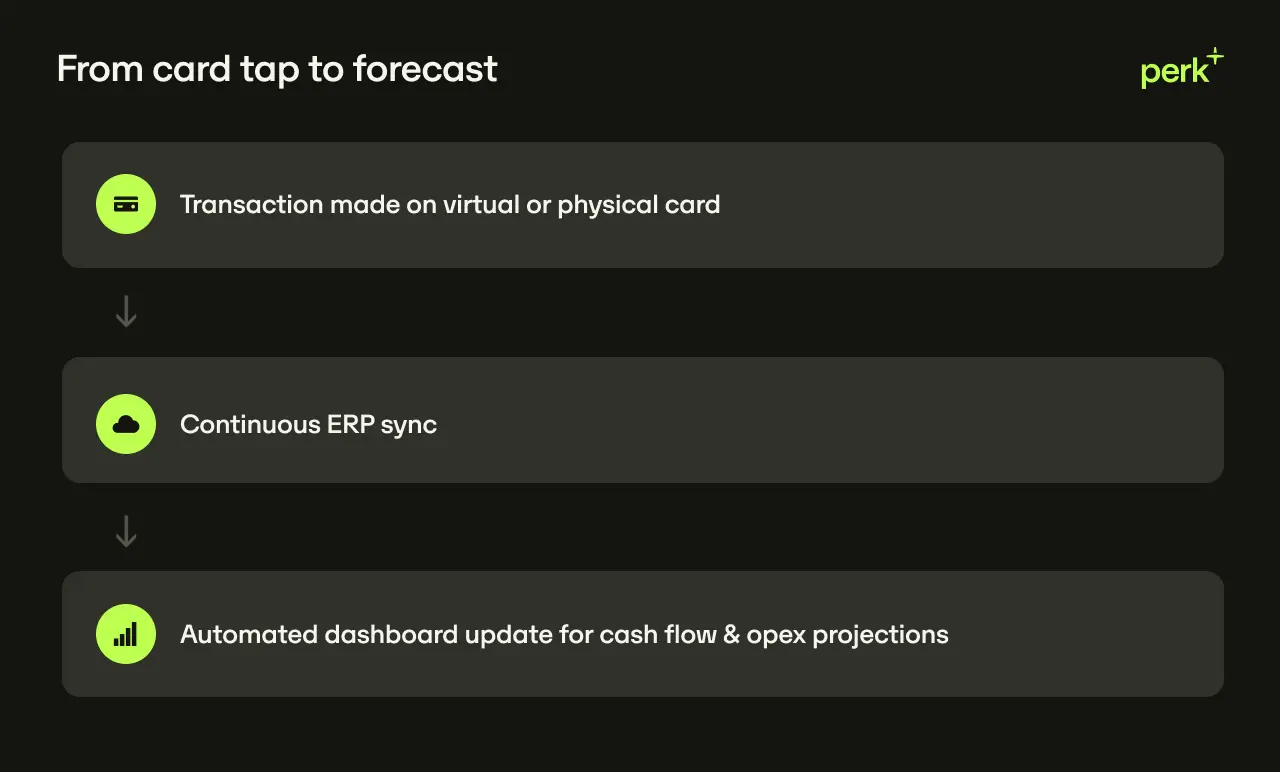 When live payment streams are integrated directly into your budgeting dashboards, they unlock a more responsive, resilient approach to forward planning.
1. Short-term cash flow planning
Instead of waiting 30 days for an expense report to land, finance teams get an instantaneous view of cash outflows. This allows controllers to monitor liquid capital day by day, making short-term runway projections incredibly tight and accurate.
2. Opex run-rate projections
With real-time card data, your operational expense (Opex) model refreshes dynamically. If software-as-a-service (SaaS) subscription costs step up or utility fees spike, the run-rate reflects the shift immediately, eliminating trailing budget variances.
3. Responsive budget re-forecasts
If a department's travel expense forecasting starts to trend significantly over budget, real-time tracking catches it early.
Rather than discovering an overspend after the capital is already gone, finance leaders can initiate responsive mid-month re-forecasts to pivot corporate spending strategy safely.
The practical building blocks to automate expense forecasting
Unlocking the predictive power of real-time transactional feeds requires setting up a unified financial ecosystem. If you are exploring how to automate expense forecasting, look for scalable work travel and software for revenue and expense forecasting that support these critical technical pillars:
Direct ERP and planning integrations
Establish direct API integrations between your corporate card platforms and core ERP or accounting systems. This bridges data silos and allows information to flow seamlessly without file exports.
Continuous sync cadences
Move away from batched weekly uploads. Configure your live data feeds to trigger continuous or instant synchronisation, ensuring your internal forecasting tools match external card transactions to the minute.
AI-powered data cleaning and categorisation
Leverage advanced automation to parse unstructured merchant text. Perk's proprietary AI platform, for instance, automatically extracts transaction information, recognises granular line items, and codes rows based on past data patterns, removing human error entirely.
Data model alignment
Ensures that your card management data structures, such as custom transaction tags, cost centres, and subsidiary parameters, map perfectly to the structural dimensions of your primary corporate forecasting models.
The core benefits: faster refreshes and boardroom confidence
Corporate credit cards can bring significant improvements to how spend is managed.
Real-time data from (virtual) corporate cards provides finance teams with continuous, up-to-the-minute data on actual spending. This instant visibility transforms expense tracking from a burden to a breeze.
Drastically fewer manual reconciliations
Because card transactions automatically import and match with digital receipts via intuitive apps, finance teams save hours previously wasted hunting down documentation.
These teams can see exactly where and when money is flowing out, giving essential transparency for building financial forecasts based on aggregating data sources that are accurate and agile enough to respond to immediate changes.
Rapid forecast refreshes
Real-time data allows financial teams to move from a multi-day spreadsheet marathon to an automated, single-click event driven by live data streams, where they can react quickly to spending trends and anomalies as they happen.
For example, suppose a department’s spending suddenly exceeds the budget. In that case, finance teams can flag it immediately and take corrective action by re-evaluating the budget, adjusting forecasts, blocking specific business expense cards, or collaborating with department heads. Negative trends like these might go unnoticed until month-end or quarter-end reports, and by then, it could already be too late to make effective adjustments.
Elevated leadership confidence
Finance managers can present numbers to executives and board members with total assurance that their forecasting is accurate and backed by real-time expense data.
With automated card tracking and real-time feeds, a mid-quarter spike in travel spend shows up on the dashboard instantly. Finance teams can adjust the quarterly forecast ahead of time, ensuring leadership goes into the quarterly board meeting with accurate, audit-ready data rather than unvetted estimates.
Ultimately, corporate card data is more than just expense tracking: It’s about giving travelling employees control over expenses and finance teams the tools to forecast confidently.
Best practices and safeguards for resilient modelling
While real-time information drastically boosts agility, financial models still require structured guardrails to remain resilient against anomalies and create a forward-looking forecasting process.
Validate live feeds first
Before completely integrating automated feeds into high-stakes predictive models, run parallel validation tests. Compare card authorisation logs against final bank settlement data over a 60-day window to measure data integrity and track structural nuances.
Establish automated anomaly alerts
It is useful for finance teams to configure proactive spend parameters within your business card platform. You can set automated thresholds to flag unusual or out-of-policy transaction activity, such as duplicate vendor charges or unexpected, high-dollar purchases, so they can be isolated for human review before skewing forecast baselines.
Blend complementary live sources
Card data offers an unparalleled look at operational spending, but it shouldn't exist in a silo. Combine real-time corporate card streams with automated bank data feeds and pipeline sales metrics.
Integrating your expense metrics with real-time revenue indicators creates a comprehensive, reliable view of corporate financial health.
Use Perk Pay to improve forecasting through real-time data
 Perk Pay is the ability for businesses to streamline their corporate cards given to work travellers and get control over spend with AI-powered payment solutions.
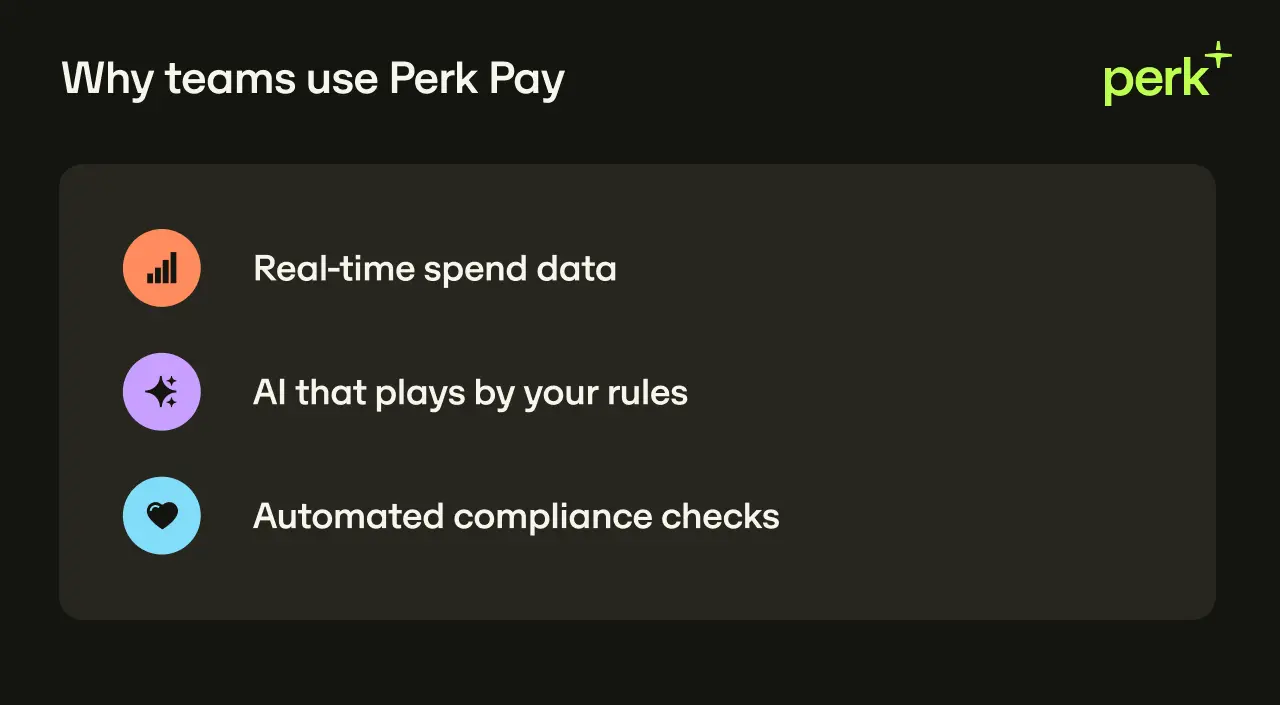
Vicki Williams, VP of Revenue, Perk UK explains: "Finance teams can improve forecasting and budgeting with tools such as real-time spend data, AI-driven analytics and automated compliance checks."
Real-time spend data
Perk Pay offers real-time access to corporate card transactions and enables your finance team to monitor spending as it occurs. Work travellers visiting Paris and spending £20 on coffees for clients with their (virtual) corporate card don’t need to send in paper receipts for the finance team back in London, as spending is immediately visible within Perk’s all-in-one platform - including currency conversions.
This allows proactive adjustments to forecasts and budgets, ensuring financial plans align with actual spending patterns. With access to real-time data, your organisation can identify trends, manage cash flow effectively, and make data-driven financial decisions that support your goals.
AI that plays by your rules
Perk Pay’s AI-driven analytics adapt to your organisation’s specific policies and procedures, analysing spending trends and spotting anomalies.
It’s AI that plays by your rules, working within your guidelines to ensure compliance and efficiency. With additional AI fraud detection, you can rest assured that your spending aligns with your organisation’s security standards. This customised approach enhances forecast accuracy and supports better budgeting decisions as AI adapts to the unique financial dynamics of your business environment.
Automated compliance checks
Perk Pay automates compliance checks within expense workflows, helping to ensure that spending follows your company’s policies and regulations.
This automation reduces errors and minimises non-compliance risk, keeping your organisation audit-ready across regions. With compliance effectively managed, finance teams can confidently focus on strategic planning and forecasting.
Powering real work by eliminating friction
Ultimately, upgrading your financial tracking tools isn't just about cleaner data, it's about maximising organisational productivity.
With regular travel for work, finance teams need to see real-time data from corporate card transactions to manage spending and forecast future budgets.
Perk’s powerful platform simplifies how your teams travel for work, and combines with your spend tools to give you a single platform to manage everything. By removing the friction of manual bookkeeping, finance departments can step away from reactive policing and step up into proactive, strategic planning.
Schedule a demo with Perk today to see how simple real-time spend management can be.
Written by

Chief Spend Officer, Perk
